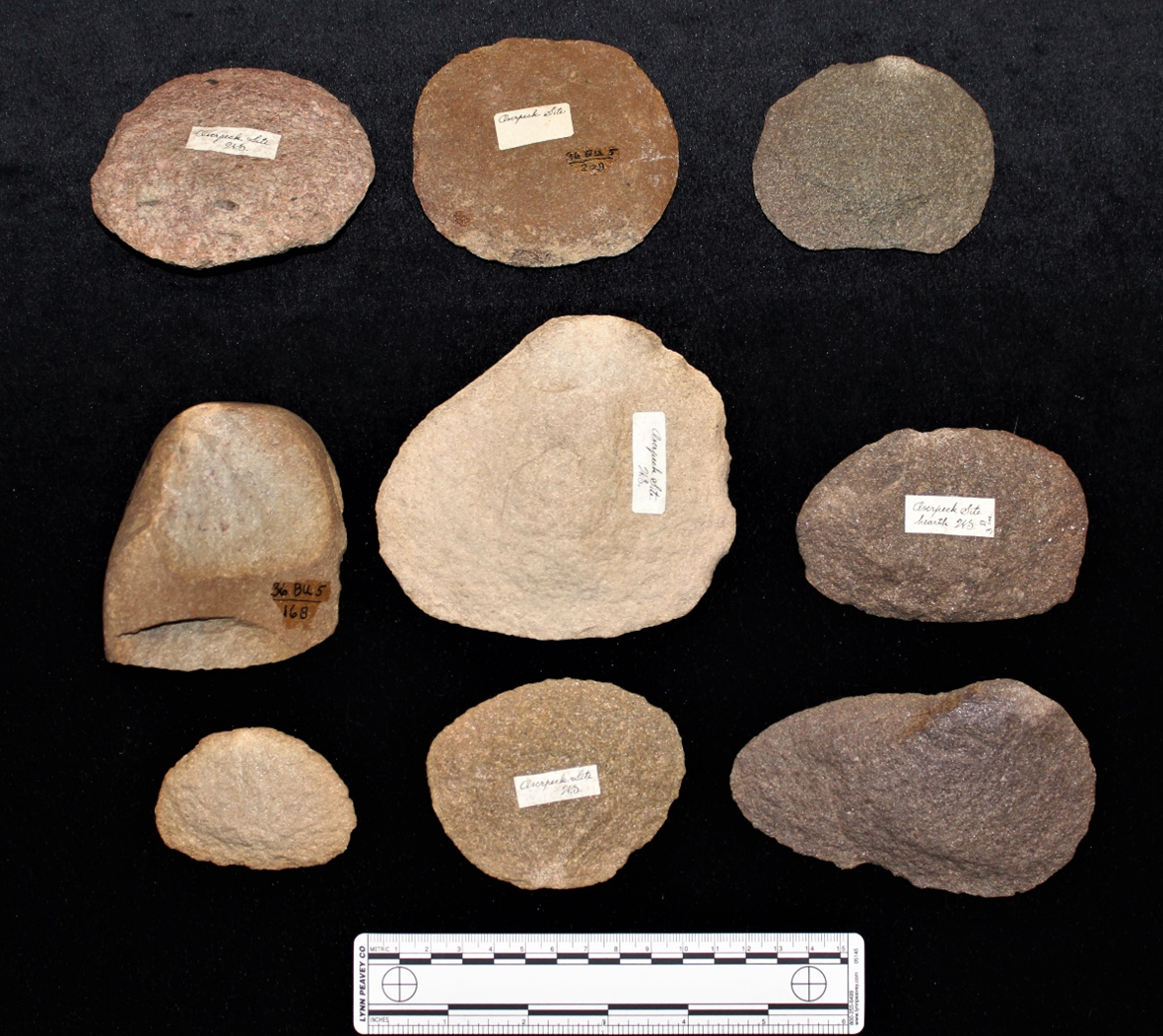
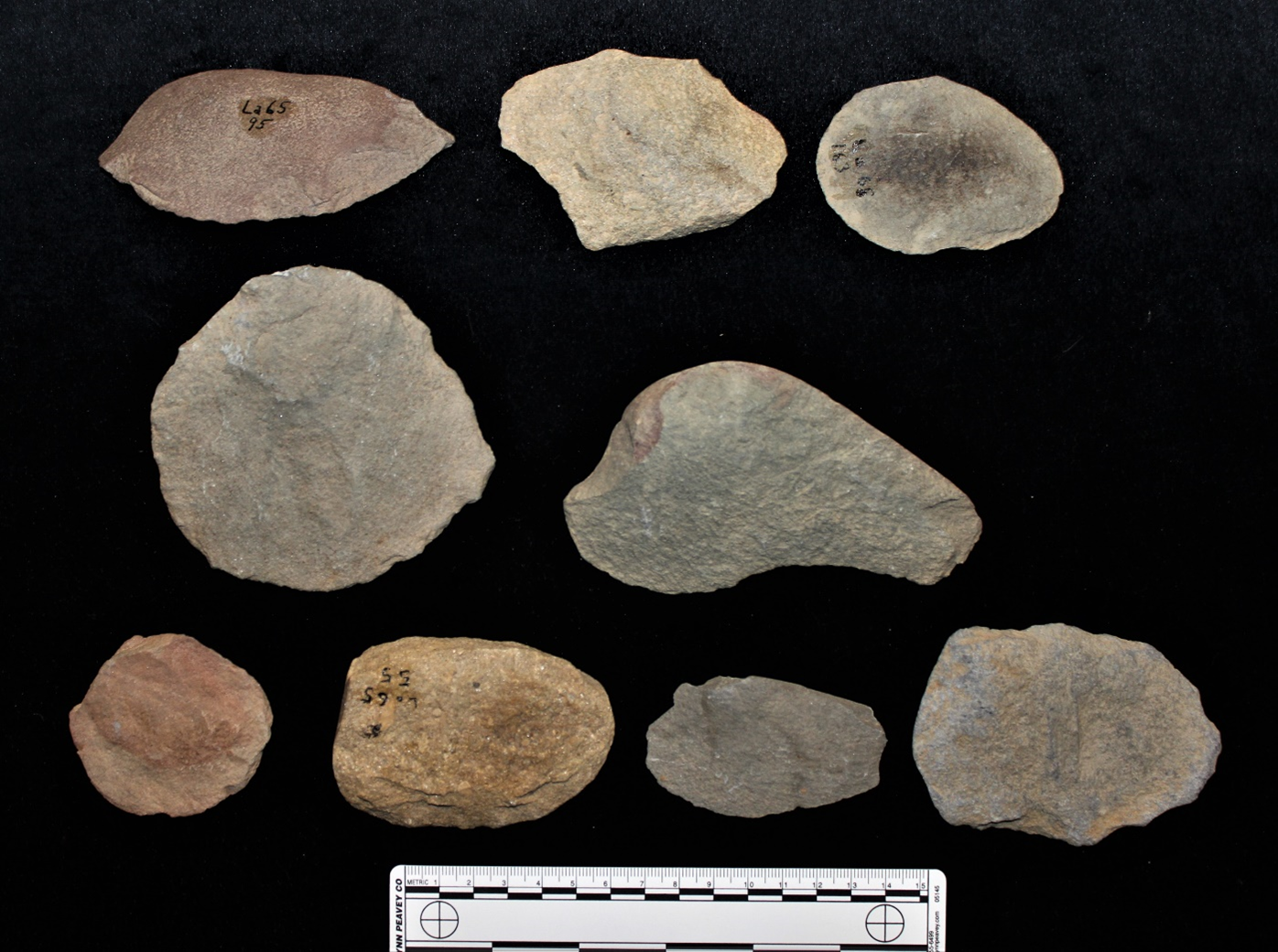
Friday, June 14, 2013

Perry County


This week our journey through the archaeological heritage of Pennsylvania brings us to Perry County, nestled in south central Pennsylvania between Cumberland and Juniata counties. Situated in the Ridge and Valley physiographic province, its terrain is characterized by long, linear mountain ridges and broad, rolling valleys. These sandstone and shale ridges typically range from 800 to 1200 feet above mean sea level in elevation and are fairly uniform. Their formation is the result of folding, faulting and erosion of sandstones, limestones and shales.  The underlying soils are derived from these rocks resulting in dry, shallow soils.  The drier ridge tops with shallow, nutrient poor soils, are distinguished by chestnut oak (Quercus montana) and black gum (Nyssa sylvatica) with red maple, other oaks, and an understory of shrubs including blueberries (Vaccinium spp.), huckleberries (Gaylussacia spp.), and mountain laurel (Kalmia latifolia). Some of these ridgetop woodlands also contain a significant component of pitch pine (Pinus rigida) and scrub oak (Quercus ilicifolia); these areas are known as Pitch pine-scrub oak barrens (Natural Heritage Inventory, pg.6). Archaeological evidence for native peoples in these upland settings accounts for almost 34% of the recorded sites in Perry County according to the Pennsylvania Archaeological Site Survey (PASS) files.
bipolar cores from 36Pe2

Poor soil associated with these ridgetops, makes the broad valleys and associated rivers and streams a much more likely settlement area and this behavior is reflected in the archaeological record. The county is bounded on the east by the Susquehanna River, and  contains several smaller streams such as the Juniata River, Tuscarora Creek and Shermans Creek provide.  These riverine areas harbor 52 (65%) of the 80 sites recorded in the PASS files for Perry County. Tuscarora State Forest in western Perry County contains remnants of an old growth virgin Hemlock stand in the Hemlocks Natural Area.   Forested valleys were a mix of hemlock, basswood, sugar maple, sweet birch and an understory of ferns, sedges and berry shrubs. Careful examination of soils from certain archaeological excavations reveal seeds and pollens from many of these species and aide archaeologists in creating a “painting” of the environmental setting of a site.

early-Middle Archaic projectile points - Perry County


 An archaeological investigation conducted prior to construction of a gas pipeline project in the mid 1990s yielded significant data relating to pre-history of Perry County and specifically contributed new information to our understanding of the Clemson Island culture. Located along the west bank floodplain of Shermans Creek is the Miller Field site (36Pe2).  This site produced over 5,000 artifacts and fifteen cultural features comprised of fire pits/hearths, one postmold pattern - probably representing a house feature, and four large multi-use pits.  Three radiocarbon dates were obtained here and they coincide with the site's Late Woodland Clemson Island pottery, establishing a date of occupation between A.D. 805±30 and A.D. 1290±30.
Route 11/15 excavation in progress

Research and analysis of the data by archaeologists determined that this site was a small multicomponent, seasonally occupied camp or single farmstead utilized by native peoples from the Transitional period (2,700-4,300 years ago) through the Late Woodland period (450-1,100 years ago).  Examination of flaked stone tools, unmodified cores and core fragments provided evidence of projectile point manufacture and resharpening of points which occurred frequently at the Miller site. Stone tools were made from small blocks and stream pebbles using a combination of hard and soft-hammer percussion techniques. Microscopic analysis of wear patterns on these tools indicated varying degrees of unifacial and bifacial wear on primary and secondary trimming flakes.  These wear pattern analyses suggest their use in cutting and scraping, activities related to food processing.  Very few faunal remains were evident, but an abundance of nuts, fruits and seeds were identified through flotation recovery.  These included grape, strawberry, blackberry, hickory, chestnut, and cultivated maize. A recurring presence of carbonized nuts and maize was identified as an indicator of occupation during late fall and early spring.

Clemson Island ceramics were analyzed in relation to vessel size and function.  Typical ceramic types included Cordmarked, Levanna Cord-on-Cord and Clemson Island Punctate. Archaeologists observed a trend among these various forms, which were dated on feature contexts. Once introduced, the ceramic types remained in use through the Clemson Island Culture continuum. This comprehensive examination  provides researchers with an in-depth analysis of the site, but more importantly provides site context and a broader understanding of cultures thereby strengthening our understanding of our  Commonwealth's prehistory.

More recent archaeological investigations were conducted along the Susquehanna River at Liverpool, PA. There, Route 11/15 was widened and the resulting yielded data revealed some of our earliest occupation periods in Pennsylvania. Excavations at 36Pe16, the Wallis site, have provided evidence of a seasonal occupation beginning 11,000 years ago. Various pre-historic artifacts were recovered including six fluted points or point fragments, two Clovis-like points and several Early and Middle Archaic points (6,000-9,000 years ago). Over 590 other tools were found which consisted of knives, drills, gravers, spokeshaves, scrapers, and "beaks". Of the approximately 700 ground stone tools recovered, 38% of were hammerstones. Other ground stone tools included netsinkers, atlatl weights, choppers, pitted/nutting stones, anvil stones, hoes and axes.
fluted projectile points and fragments from 36Pe16

The Paleoindian (10,000-16,500 years ago) group use of the site was likely as a butchering or hunting camp. During the Paleoindian period the Wallis (36Pe16) site was a sand- and cobble-covered riverbank, approximately seven feet lower than the current ground surface.  This area was frequently flooded and it is likely that any camps would have been located on a higher terrace, more suitable for short term, seasonal occupation. Microwear analysis of spokeshaves (tools with a concave edge used for shaping and smoothing shafts such as arrows or tool handles) was used to identify wear patterns as indicators of tool function.  Scrapers and gravers, both associated with butchering and cleaning hides and processing bone, were also examined. The edge wear analysis identified activities related to hunting, butchering, hideworking and the manufacturing tools of stone, bone, wood and antler. Tools made from high-quality Onondaga chert and fine-grained black cherts, indicate a large foraging territory which extended several hundred miles from the site.

in-situ leaf-shaped tool blank cache

These activities all indicate a broad subsistence diet. The same is true for the Early Archaic period. One thing of note is that the artifact densities increased during this period indicating the presence of multiple occupations.  Soils examined during the excavations yielded pollen samples that indicate a spread in the forested areas and grasslands disappeared. Riparian vegetation growing along the riverbank included cattails and members of the lily family, which have edible tubers. Archaeologists also recovered the bones of coyote, and either wolf or fox, indicating consumption of these animals during this time. A cache of stone tools which had been set aside apparently for later use, suggests a planned return to the site that did not materialize. Fifty-two leaf-shaped tool blanks dating to around 7,000 years ago, made from various stone materials from as far as the Ohio River Valley and as near as the lower Susquehanna River Valley were also discovered. The hunter-gatherers who left this cache operated in a large foraging territory or had an expansive trade network with other groups.  Given the location on the banks of the Susquehanna River, either explanation is plausible.
fire-cracked rock / hearth feature

 During the Middle Archaic period (6,000-9,000 years ago) the site was discovered to have evidence of agriculture based on the findings of a digging tool, a chopper, and pitted stones. During the Late Archaic period at least 5 periods of occupation were present. .  Stone tools recovered included a netsinker, three pestles and grinding stones used to perform a variety of butchering and processing tasks.  Hideworking was still being done as well as woodworking, soft stone boring, and fashioning of bone tools based on the microwear analysis. The presence of many hearths and other features implies that there were larger groups of people utilizing the landscape for longer periods of time.  Stone tools of this period were made using local cherts, indicating a smaller foraging territory.

During the Transitional Period the site was a base camp of relatively long duration used by large groups. Some of the things consumed at this site included foraging foods as well such as nuts, acorns, and various fruits. Other food sources included large, medium and small mammals as well as turkeys, grouse, and quail. The lithic artifacts provided evidence for temporal changes in point style, technology, and lithic type use. The wide variety of wild plant foods recovered during this period and the observed residues inside steatite vessels provide strong evidence for the presence larger bands of people and the need to obtain additional food sources leading into the Woodland period. 

The excavation at Wallis site (36Pe16) produced an abundance of information thereby improving our understanding of some of the earliest occupation periods along the Susquehanna River, but due to its location along a floodplain it offered very little evidence for later Woodland occupations.  Archaeologists must excavate and examine a multitude of sites in order to look at and understand the broader picture of Pennsylvania prehistory. Fortunately, the combined data from these projects provide a more comprehensive view of activities by native peoples in Perry County than was once thought. 

We hope you have enjoyed this short overview of Perry County and that this will inspire an interest in recording and preserving the archaeological sites in your community. These resources are Pennsylvania’s heritage and for all of us it is our window into the past. Help us to protect and preserve these archaeological resources which are crucial to our understanding of the past. We encourage every citizen to take an active role in preserving our archaeological heritage and ask that you respect these sites and Preserve our Past for the Future.


References:
Miller, Patricia E.

The Wallis Site; The Archaeology of a Susquehanna River Floodplain at Liverpool,
Pennsylvania. Byways to the Past series, Pennsylvania Historical and Museum
Commission for the Pennsylvania Department of Transportation, 2009.

Miller, Ph.D. Patricia E., James T. Marine, M.S., Frank J. Vento, Ph.D.

Archaeological Investigations Route 11/15 Improvements (SR0011, Section 008)              Juniata and Perry Counties, Pennsylvania. ER No. 1989-0381-042. Unpublished    Manuscript, Section of Archaeology,  The State Museum of Pennsylvania.


Stewart, R. Michael

Phase III Data Recovery Shermans Creek Site (36Pe2), prepared for Texas Eastern
Transmission Corporation, 1995. Unpublished Manuscript, Section of Archaeology,
The State Museum of Pennsylvania.

Natural Heritage Inventory


For more information, visit PAarchaeology.state.pa.us or the Hall of Anthropology and Archaeology at The State Museum of Pennsylvania .
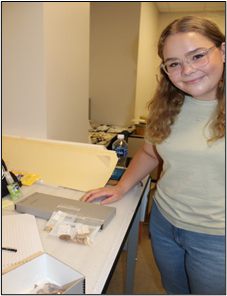
Friday, June 7, 2013

The Cedar Cliff High School Simulated Archaeological Excavation Project

On May 17th, the Archaeology Section of the State Museum of Pennsylvania began assisting Cedar Cliff High School (West Shore School District, Cumberland County, Pennsylvania) with a three week simulated archaeological project. As part of Mr. Daniel Reilly’s AP World History class, 17 students are spending 80 minutes per day learning about and doing archaeology at a simulated site near the sports stadium. For these students, it becomes experiential learning and a multi-disciplinary experience they will be able to link to their other classes such as science and mathematics.

2013 Cedar Cliff High School Simulated Archaeology Project

A simulated archaeological excavation can be defined as an experimental project organized by a classroom teacher that has an educational goal of reconstructing human behavior using archaeological techniques (Chiarulli et al. 2000). Although, students can learn about archaeology and archaeological methods in a classroom setting, there is nothing like a hands-on experience through a simulated excavation. In the past, the Section of Archaeology at the State Museum has worked with Susquehanna High School on a very popular forensics archaeology project and now another high school is getting involved in archaeology as a way to enhance the educational experience of their students.

The field work actually began several weeks ago, when Mr. Reilly (assisted by several other teachers who were intrigued with the project) created a mock archaeological site by burying artifacts in the ground. They created a multi-component site; that is, one dating to both historic Euroamerican times and one dating to a Native American occupation prior to the arrival of the Europeans. The artifacts buried in the Native American camp site included a fire-cracked-rock hearth or oven with charcoal and food remains situated next to a pile of flakes from the production of stone tools (debris created by an actual flint knapping demonstration). In the corner of the site, three burials were placed; not actual human remains, but deer skeletons aligned in a human-like fashion – thus creating the “deer people”! The Euroamerican site is represented by a brick fireplace with charcoal, broken dishes and food remains. Mr. Reilly registered the site with the Pennsylvania Archaeological Site Survey and was assigned the number of 36CU0210.

The students began with several days of classroom related work where they were taught the difference between archaeology and paleontology; that archaeology is a subfield of anthropology – the study of human cultures; the nature and significance of stratigraphy; and the importance of archaeological context or the location of the site and the three dimensional location of the artifacts within it.  The students were treated to a flint knapping demonstration where they were offered the opportunity to try their hand at chipping stone into tools. At the end of this class, they attached their tools to wooden handles to experience actually using stone tools.

Mr. Reilly holds a Masters degree in Archaeology from Queen’s University of Belfast in Northern Ireland where he has excavated Bronze Age, Iron Age, and Medieval sites.  He also spent four years conducting compliance archaeology (i.e. archaeology conducted in compliance with historic preservation laws such as the National Historic Preservation Act of 1966 or the  State History Code) in the Middle Atlantic region before becoming a teacher. He is very excited about this project but it required a lot of planning and effort on his part. Working with a limited budget, he received assistance from The State Museum of Pennsylvania, Section of Archaeology in the form of equipment (shovels, buckets, tapes and screens). Perhaps next year, someone will be willing to donate these materials as a permanent contribution to this ongoing project. Just as importantly, a staff person from the Archaeology Section of the State Museum was on hand most days to help with the management of his crew.

using the transit to set in grid for mapping

Field work began with the students conducting a controlled surface collection across the ten meter (30 feet) by sixteen meter (48 feet) site, placing flags where artifacts were found. This was followed by a lesson on the Topcon total station (a laser based electronic transit and data recorder) from a staff person from the State Museum and laying out the excavation grid. Archaeology is all about mapping and identifying patterning in artifact distributions. Everything needs to be mapped!

setting in stakes for the grid

The State Museum recently received a new data recorder which was generously donated by Productivity Products and Services, Inc. in Saxonburg, Pa.  This recorder replaced one that was nearly 20 years old and no longer functioning.  This donation allowed us to demonstrate current data collection methods and produce detailed and accurate site maps of the excavation. A special thanks goes to Randy Miller of Productivity Products and Services, Inc. for his time and expertise in helping us set up and make use of this new equipment.

examining the screen for artifacts

Based on the controlled surface collection, eight teams of two students each selected a one meter unit for excavation. Using the principles of the Pythagorean Theorem (A squared + B squared = C squared), the students placed stakes at the corner of their squares, connected them with string and started excavating. The plowzone is removed with shovels and the soil is screened through a ¼ inch mesh shaker screen. The students were taught that the artifacts in the plowzone have been disturbed and their context has been compromised. Consequently, they do not need to be mapped with the same precision as those found at deeper levels in undisturbed soil layers. But, once in the subsoil, they began to more carefully dig with trowels. 
  

excavating a chipping cluster where stone tools were made

The field work portion of the project concluded on June 5th so students could prepare their reports. Each team was responsible for taking detailed field notes to document the location of features and the artifacts found in them. In the lab, the artifacts will be examined and a report developed that documents the methods and the findings. The students enjoy finding “stuff”, but they will also enjoy weaving the story of how the artifacts ended up at the site. Each student’s excavation report will include a review of excavation methodology, an analysis of recovered artifacts, conclusions drawn about each “culture” based on that analysis, and a recommendation for further work at 36CU0210.

excavating a chipping cluster where stone tools were made

Archaeology is a multidisciplinary study and allows teachers to demonstrate basic principles of science, geology, biology, mathematics, history and anthropology. Simulated archaeological projects can be a learning and entertaining experience for the students where they use archaeological data in a multidisciplinary program to develop critical thinking skills. The public frequently feels that archaeologists guess or speculate about how people behaved in the past. In fact, archaeology is a science and archaeologists develop hypotheses which are tested at archaeological sites. A simulated archaeological project demonstrates a systematic approach to scientific discovery and it emphasizes behavior rather than artifacts. Participation in this project and other outreach programs provides an opportunity for staff at the State Museum to educate the public in understanding archaeological methods and improves the image of how archaeology is accomplished.

excavating "deer people" graves

excavating "deer  people" graves
excavating a fireplace/hearth

State Museum of PA Archaeology Curator Janet Johnson teaches the class about the methods of artifact processing and the importance of artifact curation

 In summary, an archaeological field experience for high school students allows teachers to answer the age old question often asked by students when taking science math, etc… – “Why do we have to know this stuff?” This experience leads students to see a direct application of how other disciplines tie into creating the ‘big picture’ and allows them to understand why all learning is important.


Bibliography
Chiarulli, Beverly A., Ellen Dailey Bedell and Ceil Leeper Strudevant
2000    Simulated Excavations and Critical Thinking Skills. In The Archaeology Education Handbook, edited by Karolyn Smardz and Shelley J. Smith. pp.217-233, Altamira Press. 


For more information, visit PAarchaeology.state.pa.us or the Hall of Anthropology and Archaeology at The State Museum of Pennsylvania .

Friday, May 31, 2013


Northumberland County is Nb on the above map


Our journey through the archaeological heritage of Pennsylvania takes us to the central region of the state, Northumberland County. Located in the Ridge and Valley Physiographic Province the terrain is composed of long linear mountainous ridges and rich, fertile valleys in between these ridges.   The Susquehanna River has cut a wider valley in the sandstone and shale bedrock which underlies much of the region. Lithic resources used by Native Americans include two chert formations, the Onondaga/Old Port formation and the Keyser formation. Stone tools are also frequently found in a fine grained, slightly metamorphosed material of unknown origin. The chert formations provided native peoples with brownish black to gray cherts for their stone tools.
View of the Susquehanna River Valley at  Sunbury

 The location of this county on the Susquehanna River provided an opportunity to travel and trade for cherts from the surrounding areas as evidenced in archaeological materials recovered. The greatest percentages of sites recorded in the Pennsylvania Archaeological Site Survey files (PASS) are located in riverine settings; many of them are located along the Susquehanna. Indian foot paths which transected the area include the Tulpehocken Path, Penns Creek Path, Shamokin Path and the Wyalusing Path with additional secondary paths.  These paths ran along the mountain ridges and valleys that form the topography of this county.


 It is difficult today to imagine that Northumberland County was considered a frontier area virtually unsettled until the 18th century. Established in 1772 as the tenth county organized in Pennsylvania it was created from an 8,000 square mile tract of land lying northwest of the counties of Lancaster, Cumberland, Berks, Northampton, and Bedford. The land area of Northumberland County eventually increased to 15,000 square miles, covering the Susquehanna Valley, including all the land west of the Lehigh River to the Allegheny River and all of the land south of the New York State border to Juniata County. As the area grew and became more populated, the county was divided multiple times, which eventually led to the establishment of twenty-nine counties from this original 15,000 square mile tract of  land.

The PASS files list sites in all of the occupation time periods for this county and include six Paleoindian Period (10,000-16,500 years ago) sites. One of these sites was surfaced collected by locals for many years prior to a formal excavation for a Pennsylvania Department of Transportation bridge replacement project.  An archaeological investigation conducted for the Allenwood Bridge Replacement project in the late 1980’s uncovered archaeological features from the Late Archaic/Transitional Period through the Late Woodland Period.  Evidence of the Late Archaic occupation included thirty-seven stemmed and side-notched points.   Three burn features were identified and radiocarbon dated to between 2007 – 3367 years ago. These would place the occupations in the Transitional and Early Woodland periods.  Archaeologists determined that the site was likely occupied for short periods, possibly in the fall as indicated by nutshell recovered in one of the features. 
Structure 1 at 36Nb3, note the charred post at far left of image

The later occupation dates for this site were determined based on both radiocarbon dating and the recovery of associated prehistoric ceramics. Soil features included semi-circular post mold patterns interpreted as Clemson Island (circa 1000 AD) house patterns.  An additional Late Woodland occupation was identified as Shenks Ferry based on ceramics recovered in a burn feature with a radiocarbon date of 1494±90 B.P. Two semi-subterranean keyhole structures were also identified and firmly dated to the Shenks Ferry culture time period (1400-1500 AD).  These keyhole structures are frequently found on the periphery of Late Woodland villages (Hatch1980), and it was surmised that these structures also represent the western periphery of a series of Late Woodland villages at 36Nb3.  Agricultural remains recovered include maize, beans, grape seed and nutshell. The excavation provided a wealth of information for Late Woodland occupations that furthered our understanding of these culture groups and led the way for additional specialized analysis of archaeological investigations.

36Nb117 surface collecting of site

Excavations conducted by the Pennsylvania Historical & Museum Commission (PHMC) in the 1990’s uncovered additional evidence of another Late Archaic site. The Central Builders site (36Nb117) is located two miles from the confluence of the north and west branches of the Susquehanna River. It was the location of the first Archaeology Week celebration in Pennsylvania in 1990.  It attracted local attention because it contained a high concentration of artifacts on the site’s surface. The initial work consisted of a controlled surface collection and this produced thousands of artifacts dating from Early Archaic to Late Woodland times. During this process, a large Late Archaic fire-cracked-rock feature was located and partially excavated. The most significant data however, was uncovered during geomorphological testing. A short backhoe trench was placed on the levee in order to examine site stratigraphy of the soil. Near the bottom, at a depth of approximately nine feet, a few artifacts were uncovered including two large chert cores. Over the next several months, a two meter square was placed and excavated to the depth of the artifacts. At the level of the two cores, more artifacts were uncovered along with a metarhyolite Kirk corner notched projectile point and a small hearth. The charcoal from this hearth was radiometrically dated to 9165+210/-205 BP.  The metarhyolite was carried 130 kilometers (80.7 miles) from its source in South Mountain near Gettysburg and demonstrates that Early Archaic bands were moving over and occupying large territories. 


Metarhyolite  Kirk point recovered from Central Builder's site.


Northumberland County played an important role during the French & Indian War (1755-1763). Fort Augusta (36Nb71), located at present day Sunbury, was the largest defensive fort established on the Susquehanna River. This was considered the western frontier at that time.  Construction began in 1756 and improvements continued until 1758. It was the garrisoned the longest by provincial troops and provided Indian trade to the nearby village of Shamokin. After 1761 Augusta was the only provincial fort maintained in the commonwealth (Waddell & Bomberger 1996).  Excavations conducted here under the Works Progress Administration (WPA) uncovered portions of the stockade and personal effects that provided evidence of foods and daily activities of the troops. 
1756 map of Pennsylvania note the location of Shamokin

The Commonwealth of Pennsylvania acquired a portion of the fort property in 1932 for the purpose of interpreting Fort Augusta’s history.  Archaeological investigations on the site in 1938, 1978, 1979, 1981, and 1992 discovered elements of the fort’s stockade, officer’s quarters, north flanking wall, moat, and powder magazine, permitting placement of the fort on the modern landscape.  Today visitors can view excavated artifacts and learn more about the fort in the Hunter Mansion, locally operated by the Northumberland County Historical Society under agreement with the PHMC.
WPA excavation in 1938  was visited by a group of  boy scouts

Field drawing of the excavation of the Powder Magazine at 36Nb71

Excavation of the Powder Magazine


We would be remiss in not reporting on another of our PHMC properties in Northumberland County, the Joseph Priestley House.  Joseph Priestley is most notable for his discovery in 1774 of oxygen while living in England.  Very few people know that he relocated to Pennsylvania after his home and labs were burned because of his religious beliefs. Priestley’s support of the American Revolution and his opposition to the Angelican Church combined with support of the French Revolution led anti-French rioters to destroy his home burning his lab and extensive library in 1791.  Priestley relocated in 1794 and died here in 1804. He was a noted theologian, political progressive and prolific author whose scientific contributions include the development of the carbonation process, the identification of carbon monoxide, and early experiments with electricity.
Concentration of lab equipment recovered at Joseph Priestley House (36Nb70)


Excavations conducted by the PHMC under the direction of Stephen G. Warfel at (36Nb70) recovered evidence of Priestley’s lab equipment.   Archaeologists discovered the most important artifact assemblage recovered during the 1986 field season – 259 fragments of broken laboratory equipment. The fragments primarily consisted of earthenware tubes, some of which retained chemical residues. Analysis of a sample of these tube fragments and residues permitted speculative reconstruction of experiments Dr. Priestley had performed in his laboratory.“Characterization of the residues ... suggested that in all cases the labware was utilized at elevated temperatures and most likely in the presence of molten reactants”  (Scheetz and Smith 1990). Experiments were clearly designed to produce oxygen, a finding consistent with Dr. Priestley’s efforts to defend his theory of phlogiston during the final years of his life (see Soloveichik 1962: 644-646.) The discovery of laboratory apparatus fragments in Test Pit 1, located in close proximity to the door and window of Dr. Priestley’s laboratory, is no coincidence. They were obviously discarded after breakage by being tossed through one or the other opening, a refuse disposal practice consistent with 18th century behavior. (Warfel 1997) The recovery of these laboratory artifacts and household goods provide tangible evidence of this important researcher and theologian. Visitors to the site can enjoy the house and reconstructed laboratory, furnishings include the fragments of his laboratory equipment and household furnishings.

Fragments of household wares recovered from site excavations at 36Nb70

We hope you have enjoyed this journey through the rich archaeological heritage of Northumberland County and you will seek out the heritage of your community.   Understanding and exploring our archaeological heritage is pivotal to our understanding of human behavior and our ability to change and adapt over time- just as the peoples of Northumberland County have done for thousands of years.

 Bibliography
1996 Waddell, Louis M. and Bruce D. Bomberger
         The French and Indian War in Pennsylvania 1753-1763. Pennsylvania Historical and Museum Commission. 
           
1993 Miller, Patricia E., Roger Moeller and Dr. Frank Vento
          Archaeological Data Recovery at Site 36Nb3, S.R. 0044, Section 004, Northumberland and Union Counties, Pennsylvania. Unpublished manuscript files, Section of Archaeology, State Museum of PA.

 Wallace, Paul A.W.
1965       Indian Paths of Pennsylvania. The Pennsylvania Historical and Museum Commission. Harrisburg

Warfel, Stephen G.
1997     ARCHAEOLOGICAL INVESTIGATIONS AT THE JOSEPH PRIESTLEY HOUSE AND LABORATORY,   36 Nb 70,  1986 and 1992.

For more information, visit PAarchaeology.state.pa.us or the Hall of Anthropology and Archaeology at The State Museum of Pennsylvania .